
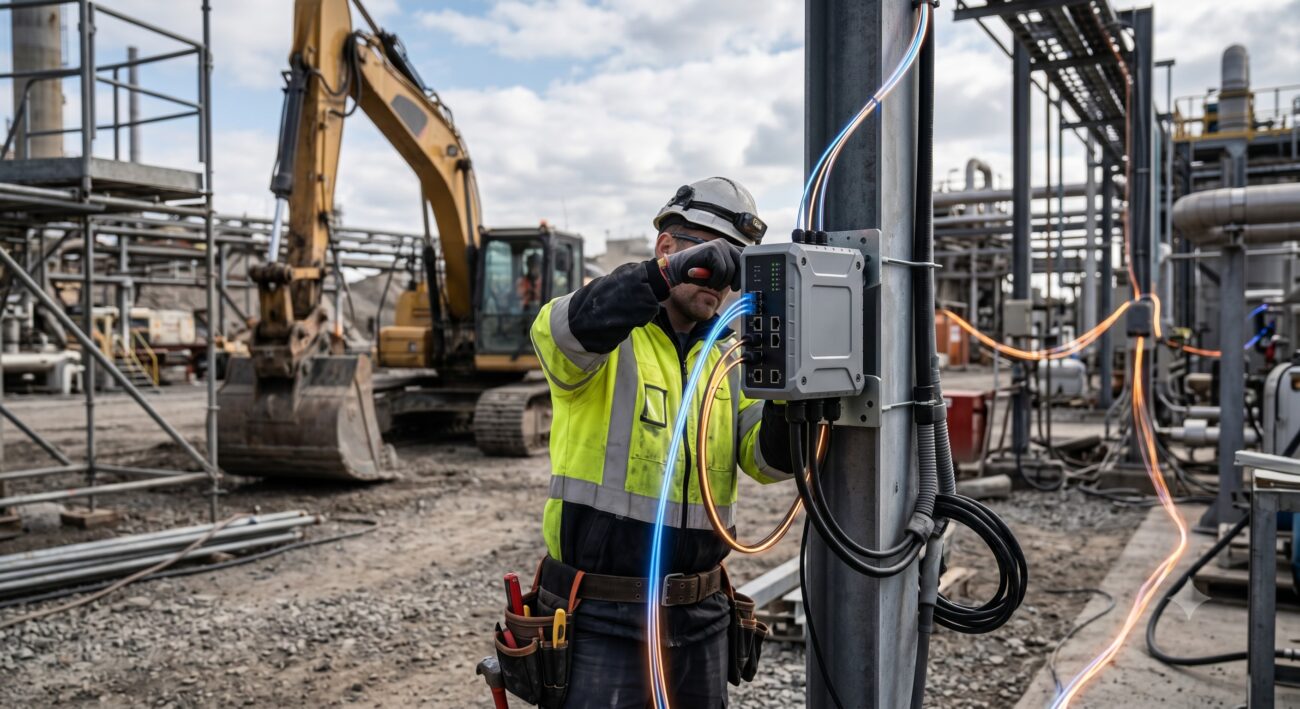
Introduction: The Demand for Resilience in Critical Infrastructure
The digital transformation of industrial, transportation, and utility networks has forced a paradigm shift in network architecture. No longer confined to climate-controlled data centers, Ethernet connectivity is now the backbone of oil rigs, smart cities, railway systems, and factory floors. These environments present a formidable challenge: extreme temperature fluctuations, persistent vibration, electromagnetic interference (EMI), and physical contamination. Standard enterprise-grade hardware simply fails under these conditions, leading to costly downtime and safety risks. This guide provides a deep dive into the engineering, specifications, and deployment strategies for harsh environment wide temperature ethernet hardware, offering network architects and systems integrators the data required to build resilient, carrier-grade networks .
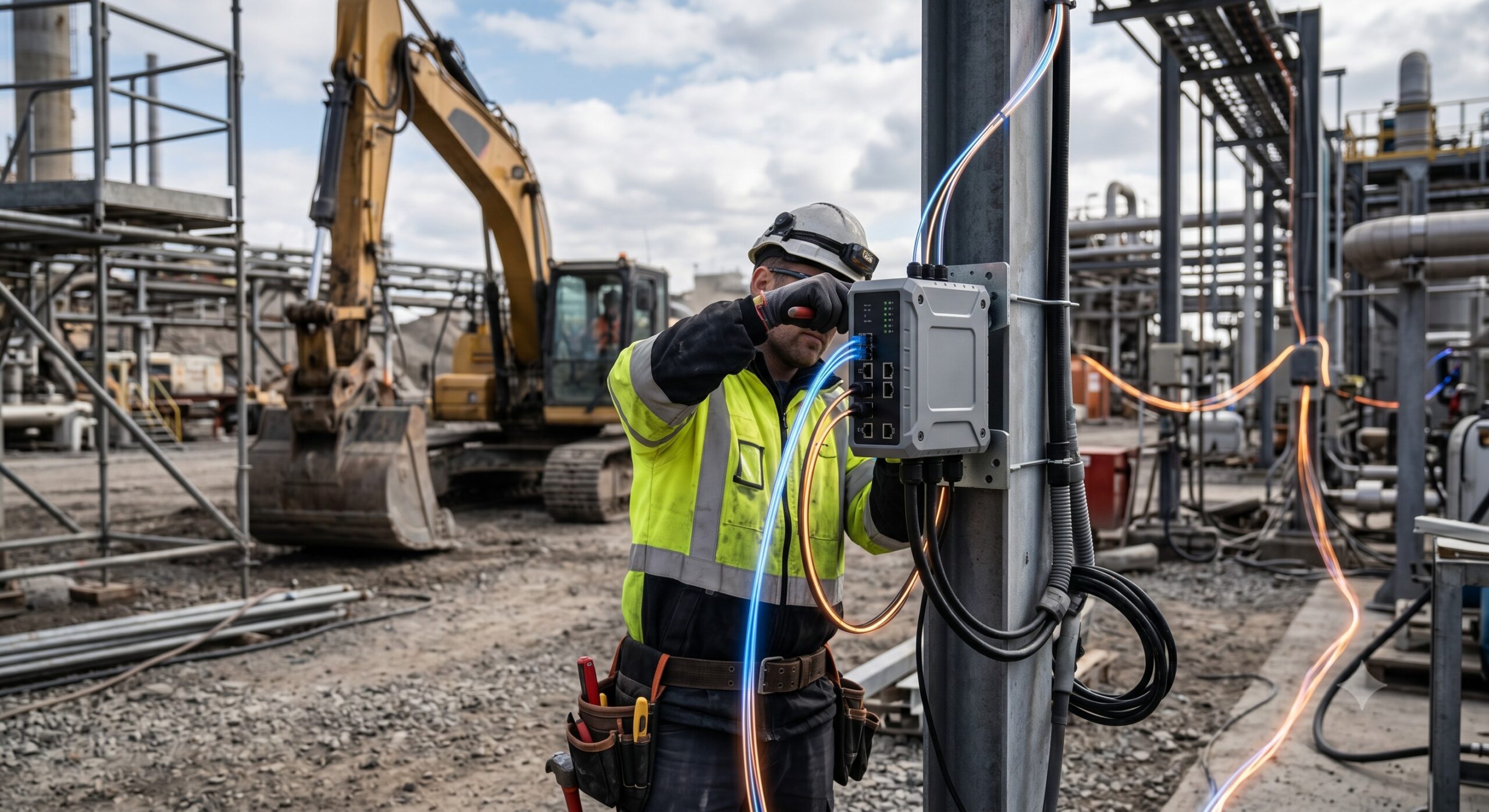
Core Architecture and Hardware Topology
Unlike their commercial counterparts, industrial ethernet switches are engineered from the silicon up for survival. The architecture prioritizes physical layer robustness and thermal management.
Thermal Design and Component Selection
The defining characteristic of this hardware class is its ability to operate across an extended temperature range, typically from -40°C to +75°C . Achieving this requires specific engineering choices:
- Industrial-Grade Components: Vendors utilize components rated for wider temperature thresholds, eschewing commercial-grade parts that might fail under thermal stress.
- Fanless, Passive Cooling: Moving parts are a primary point of failure. Harsh environment wide temperature ethernet hardware relies on passive cooling through ruggedized metal enclosures that act as heat sinks. This design is crucial for preventing dust ingress and ensuring reliability in environments with particulate matter .
- Conformal Coating: The printed circuit boards (PCBs) are often coated with a protective polymer layer to guard against moisture, dust, and chemical contaminants.
Mechanical Resilience and Enclosures
The physical casing is the first line of defense. Enclosures like the IP30, IP40, and IP67 ratings define the level of protection . While IP40-rated metal housings are common for general industrial use, IP67-rated units with sealed M12 connectors are mandatory for highly washdown or outdoor environments, such as railway rolling stock . These units also feature high shock and vibration tolerance, critical for deployments on moving machinery or in transport applications.
Technical Specifications Matrix and Standards Compliance
For a network architect, specifications are the bedrock of design. Below is a data-driven comparison of key parameters found in high-quality industrial switches.
| Key Parameter | Technical Specification |
|---|---|
| Operating Temperature Range | -40°C to 75°C (Industrial Grade) |
| Switching Capacity | Up to 36 Gbps (for 18-port models) |
| MTBF Rating | 1.2 Million Hours (Typical for hardened units) |
| Power Input Redundancy | Dual 12-48 VDC or AC/DC options |
| Enclosure Rating | IP30 to IP67 (Metal Housing) |
| Key Certifications | IEEE 802.3, EN 50155, UL/ATEX/IECEx, RoHS |
Standards and Certifications
Compliance with global standards is non-negotiable for deployment in regulated industries. Key certifications include:
- IEEE 802.3 Compliance: Adherence to base Ethernet standards for interoperability.
- EN 50155 / EN 50121: Mandatory for railway applications, covering temperature, shock, vibration, and EMC requirements .
- UL / ATEX / IECEx: Certifications for hazardous locations, ensuring the switch does not ignite flammable gases or dust .
- RoHS: Restriction of Hazardous Substances, ensuring environmental compliance.
Carrier-Grade Reliability: MTBF and Redundancy
In mission-critical infrastructure, reliability is quantified by Mean Time Between Failures (MTBF). Products like the N-Tron NT100 series boast an impressive 1.2 million-hour MTBF rating . This high level of reliability is achieved through:
- Redundant Power Inputs (Dual 12-48 VDC): Dual power supply inputs allow for connection to two separate power sources, preventing a single point of failure .
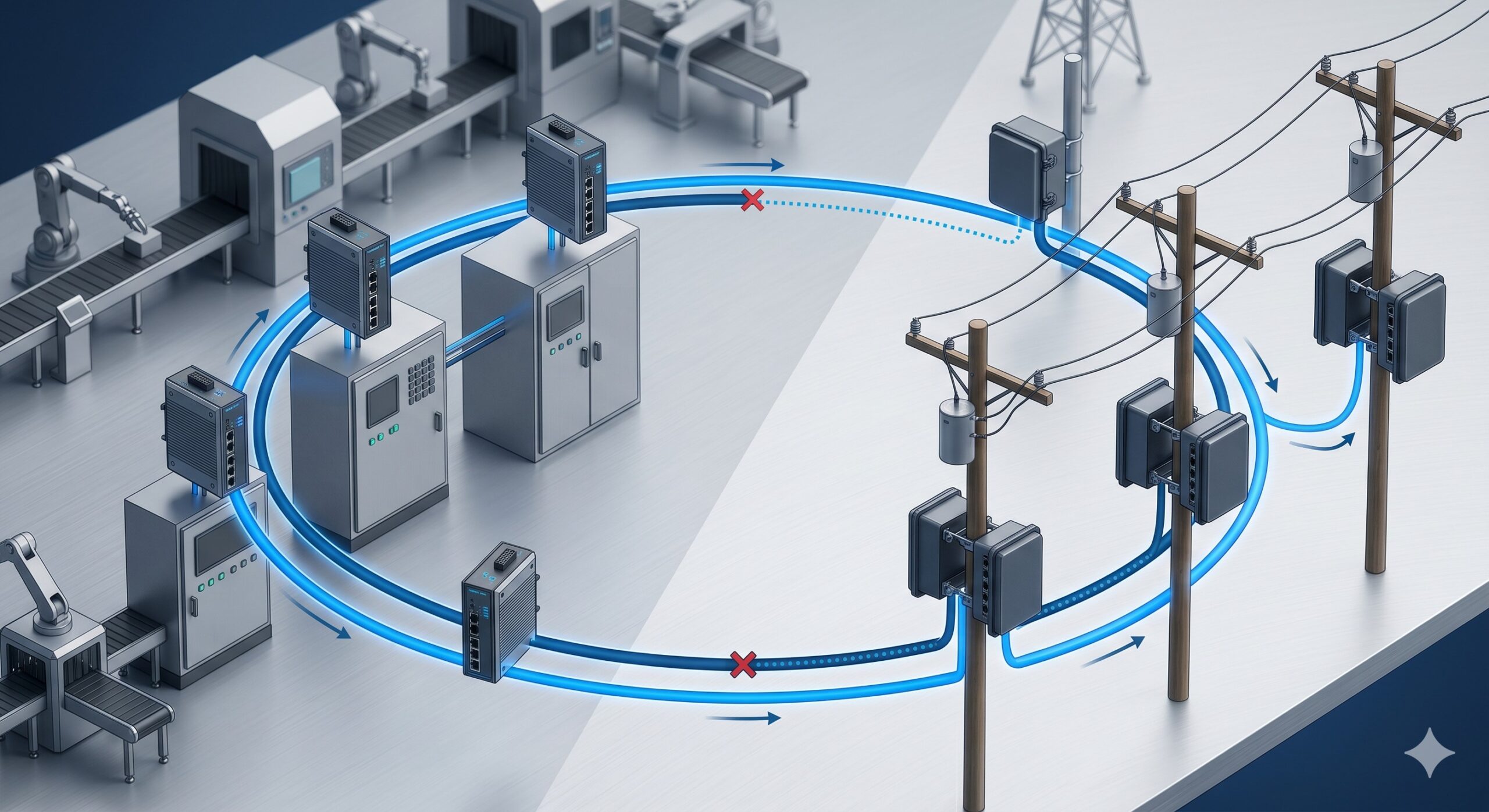
- Redundancy Protocols: Managed switches support protocols like ERPS (G.8032) and RSTP to ensure sub-50ms network failover in ring topologies .
- ESD and Surge Protection: Built-in protection (e.g., 6KV surge protection on RJ45 ports) safeguards against voltage spikes common in industrial power grids .
Benchmarking and Deployment Scenarios
The adoption of this hardware class is surging across multiple verticals. High-density datacenter scaling at the edge is becoming a reality as these switches manage IoT sensor data. In intelligent transportation systems (ITS), they provide the low-latency, deterministic networking required for traffic control and surveillance .
Compared to legacy telecom hardware, next-generation industrial switches offer superior performance-per-watt. With features like port-based QoS and Automation Protocol Prioritization (APP), they can intelligently prioritize mission-critical data packets (e.g., Profinet, EtherNet/IP), ensuring operational data is not delayed by standard network traffic . The integration of advanced features like MACsec AES256 encryption and cloud-native management (e.g., Juniper Mist AI) is also blurring the lines between enterprise and industrial networking, offering scalability and security previously unavailable in harsh environments .
Conclusion: The Strategic Imperative
Deploying harsh environment wide temperature ethernet hardware is not merely a procurement decision; it is a strategic investment in operational continuity. The initial CapEx of industrial-grade hardware is rapidly offset by the OpEx savings derived from reduced downtime, lower maintenance costs, and extended lifecycle. As industries continue to push the boundaries of automation and remote monitoring, the resilience, reliability, and advanced feature sets of these specialized switches will become the cornerstone of critical network infrastructure. For the network architect, the choice is clear: invest in hardware engineered for the extremes to ensure a network that is truly future-proof.

Leave a comment