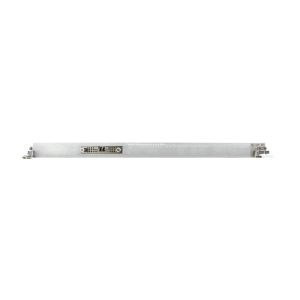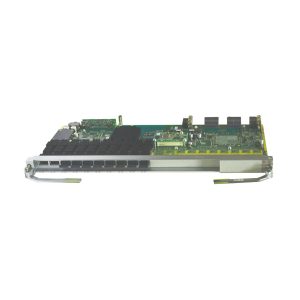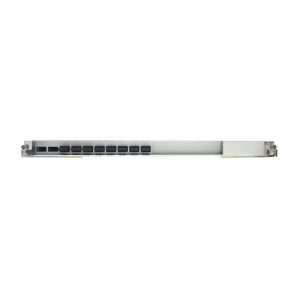


TNSAN502

0 Reviews Write a review
SKU2036062
AvailabilityIn Stock
WarrantyUp to 36 months i
×
Warranty Policy
We provide a comprehensive warranty policy.
Refer to the table for more details.

Huawei OptiX OSN 9800 TNSAN502 2 x 200G line service processing board (OTN)

Description

TNSAN502 Overview

TNSAN502 2 x 200G line service processing board (OTN), applied to Huawei OptiX OSN 9800 M24/U32/U64.

To meet ultra-large cross-connect capacity and bandwidth requirements, Huawei presents the OptiX OSN 9800 product series. The OptiX OSN 9800 product series include the OptiX OSN 9800 U64, U32, P18 and universal platform subracks. Applied at the electrical layer, the OptiX OSN 9800 U64 and U32 subracks share boards by using unified software and hardware platforms, and can work with the OptiX OSN 9800 universal platform subrack and P18 subrack, OptiX OSN 8800 platform subrack and T16 subrack, and OptiX OSN 6800 optical subracks in WDM and OTN systems.

The TNSAN502 board has only one variant: TNSAN502T33.


Valid slots for the TNSAN502 board in a M24/U64/U32 subrack

Device Number of Occupied Slots Physical Slot Logical Slot
OptiX OSN 9800 M24 2 (IU1, IU13), (IU2, IU14), ……, (IU11, IU23), (IU12, IU24) IU1 to IU12
OptiX OSN 9800 U32 Enhanced 1 IU1 to IU32 IU1 to IU32
OptiX OSN 9800 U32 Standard 1 IU1 to IU32 IU1 to IU32
OptiX OSN 9800 U64 Enhanced 1 IU1 to IU64 IU1 to IU64
OptiX OSN 9800 U64 Standard 1 IU1 to IU64 IU1 to IU64
Item TNSAN502
Functions and Features of the TNSAN502 Board (OTN Line)
Basic function Provides two line ports and supports conversions between a maximum of 320 ODU0 signals, 320 ODUflex signals, 160 ODU1 signals, 40 ODU2(e) signals, 8 ODU3 signals, or 4 ODU4 signals and 2 OTUC2/1 OTUC4 signals. For details about the service mapping path, see Application.
Backplane capacity The maximum capacity is 400 Gbit/s.
WDM specification Supports the DWDM specifications.
Tunable wavelength Supports tunable wavelengths of WDM-side optical signals in Super C band (1524 nm to 1573 nm).
FEC coding SDFEC2
Line modulation format 200G line mode:
  • 200G QPSK wDCM
  • 200G QPSK
400G line mode:
  • 400G QPSK wDCM(Dual_Ports)
  • 400G QPSK(Dual_Ports)
Typical channel spacing
  • 200G QPSK wDCM: 100GHz+n*6.25GHz(n=0,1,2...)
  • 200G QPSK: 75GHz+n*6.25GHz(n=0,1,2...)
  • 400G QPSK(Dual_Ports): 2*(75GHz+n*6.25GHz)(n=0,1,2...)
  • 400G QPSK wDCM(Dual_Ports): 2*(100GHz+n*6.25GHz)(n=0,1,2...)
OTN overhead 200G line mode:
  • WDM-side OTUC2 layer: supports SM overhead processing.
  • ODUC2 layer: supports PM and TCM overhead processing.
  • ODUk (k=0, 1, 2, 2e, 3, 4, flex) layer: supports PM and TCM overhead processing.
  • ODUk (k=0, 1, 2, 2e, 3, 4, flex) layer: supports non-intrusive monitoring of PM and TCM overheads.
400G line mode:
  • WDM-side OTUC4 layer: supports SM overhead processing.
  • ODUC4 layer: supports PM and TCM overhead processing.
  • ODUk (k=0, 1, 2, 2e, 3, 4, flex) layer: supports PM and TCM overhead processing.
  • ODUk (k=0, 1, 2, 2e, 3, 4, flex) layer: supports non-intrusive monitoring of PM and TCM overheads.
Intra-board 1+1 protection Supported
NOTE:
  • Supports intra-board 1+1 protection when working with optical protection boards.
  • Port in 400G mode: Do not support intra-board 1+1 protection.
ODUk SNCP Supported
Tributary SNCP Supported
Electrical-layer ASON Supported
Optical-layer ASON Supported
NOTE:
  • Only ASON without optical parameters is supported in high SOP mode.
  • The flex ASON must be enabled for the modulation formats whose channel spacing is greater than 50 GHz.
Digital optical label When LS Ability is enabled, the board supports loading low-frequency pilot-tone modulation signals and overheads during wavelength conversion, and can work the optical-layer board that supports the digital optical label function to detect optical power and overheads and report optical performance data.
Physical clock Supported
NOTE:
When the ODU cross-connect granularity of an OTN line port is set to the maximum granularity supported by the port, physical clock synchronization is not supported. The physical clock can be used only after lower-order ODU cross-connections are configured.
IEEE 1588v2 Not supported
ITU-T G.8275.1 Not supported
ITU-T G.8273.2 Not supported
Outband DCN Supports communication over ESCs.
Test frame Not supported
PRBS Supports the PRBS function on the WDM side.
Latency measurement The board supports latency measurement in the WDM-side optical port direction (upstream direction)
  • The board supports PM and TCM latency measurement at the ODUCn layer.
NOTE:
When VPs are configured, the board supports measuring the PM/TCM latency of higher-order and lower-order ODUk channels.
Channel loopback ODUk (k=0, 1, 2, 2e, 3, 4, flex) channel loopbacks
Port loopback Supports WDM Side Loopback
Alarm and performance event monitoring
  • Supports the monitoring of BIP8 bytes (Bursty mode) to help locate line failures.
  • Monitors parameters such as the bias current, temperature, and optical power of the laser.
  • Monitors OTN alarms and performance events.
Functions and Features of the TNSAN502 Board (SDH)
Basic function Provides two line ports and supports conversions between SDH signals from the backplane and ODUC2/ODUC4 signals. For details about the service mapping path, see Application.
Backplane capacity The total backplane bandwidth is 80 Gbit/s.
Service processing VC-12, VC-3, VC-4, VC-4-4c, VC-4-16c, VC-4-64c
Overhead processing
  • Processes the section overheads of STM-16/STM-64 signals.
  • Supports the transparent transmission and termination of path overheads.
  • Supports the setting and query of the J0, J1, and C2 bytes.
  • Supports ECC communication.
  • Supports transparent transmission of DCC channels.
SDH SNCP Supported
Linear MSP Supported
Ring MSP Supports two-fiber bidirectional ring MSP
SDH ASON Supported
Physical clock Supports SDH clock synchronization.
Outband DCN Supported
Channel loopback Supports VC loopbacks.
Port loopback Supports Virtual Port loopbacks.
2M ASON Supported.
NOTE:
Only supported when the 9800 M24 is used.
Alarm and performance event monitoring Provides various alarms and performance events, facilitating equipment management and maintenance.
Functions and Features of the TNSAN502 Board (Regeneration)
Basic function Electrically regenerates optical signals at an electrical REG station.
Regeneration mode
  • OTUC2: Bidirectional regeneration
  • OTUC4: Unidirectional regeneration
Regeneration rate
  • OTUC2
  • OTUC4
WDM specification Supports the DWDM specifications.
Tunable wavelength Supports tunable wavelengths of WDM-side optical signals in Super C band (1524 nm to 1573 nm).
FEC coding SDFEC2
Line modulation format 200G line mode:
  • 200G QPSK wDCM
  • 200G QPSK
400G line mode:
  • 400G QPSK wDCM(Dual_Ports)
  • 400G QPSK(Dual_Ports)
Typical channel spacing
  • 200G QPSK wDCM: 100GHz+n*6.25GHz(n=0,1,2...)
  • 200G QPSK: 75GHz+n*6.25GHz(n=0,1,2...)
  • 400G QPSK(Dual_Ports): 2*(75GHz+n*6.25GHz)(n=0,1,2...)
  • 400G QPSK wDCM(Dual_Ports): 2*(100GHz+n*6.25GHz)(n=0,1,2...)
OTN overhead 200G line mode:
  • WDM-side OTUC2 layer: supports SM overhead processing.
  • ODUC2 layer: supports PM and TCM overhead processing.
400G line mode:
  • WDM-side OTUC4 layer: supports SM overhead processing.
  • ODUC4 layer: supports PM and TCM overhead processing.
Electrical-layer ASON Not supported
Optical-layer ASON Supported
NOTE:
  • Only ASON without optical parameters is supported in high SOP mode.
  • The flex ASON must be enabled for the modulation formats whose channel spacing is greater than 50 GHz.
ALS Supported
Outband DCN Supports ESC communication.
Alarm and performance event monitoring
  • Supports the monitoring of BIP8 bytes (Bursty mode) to help locate line failures.
  • Monitors parameters such as the bias current, temperature, and optical power of the laser.
  • Monitors OTN alarms and performance events.

Additional information

Reviews

There are no reviews yet.

Be the first to review “TNSAN502”

Your email address will not be published. Required fields are marked *

4  ×    =  20

Back to Top

Search For Products

Product has been added to your cart