
Executive Summary: The Reliability Imperative in Industrial Networking
In the demanding landscape of industrial automation, smart grid, and intelligent transportation systems (ITS), network downtime is not merely an inconvenience—it represents a direct threat to operational continuity, safety, and profitability. For network architects and systems integrators, the selection of an industrial ethernet switch din rail form factor is a decision that fundamentally impacts the Mean Time Between Failures (MTBF) and overall resilience of the OT network. This analysis delves into the engineering principles, hardware architectures, and performance metrics that define carrier-grade reliability for these critical infrastructure components, moving beyond marketing claims to provide a data-driven evaluation .
Defining Carrier-Grade: Beyond Commercial-Grade Specifications
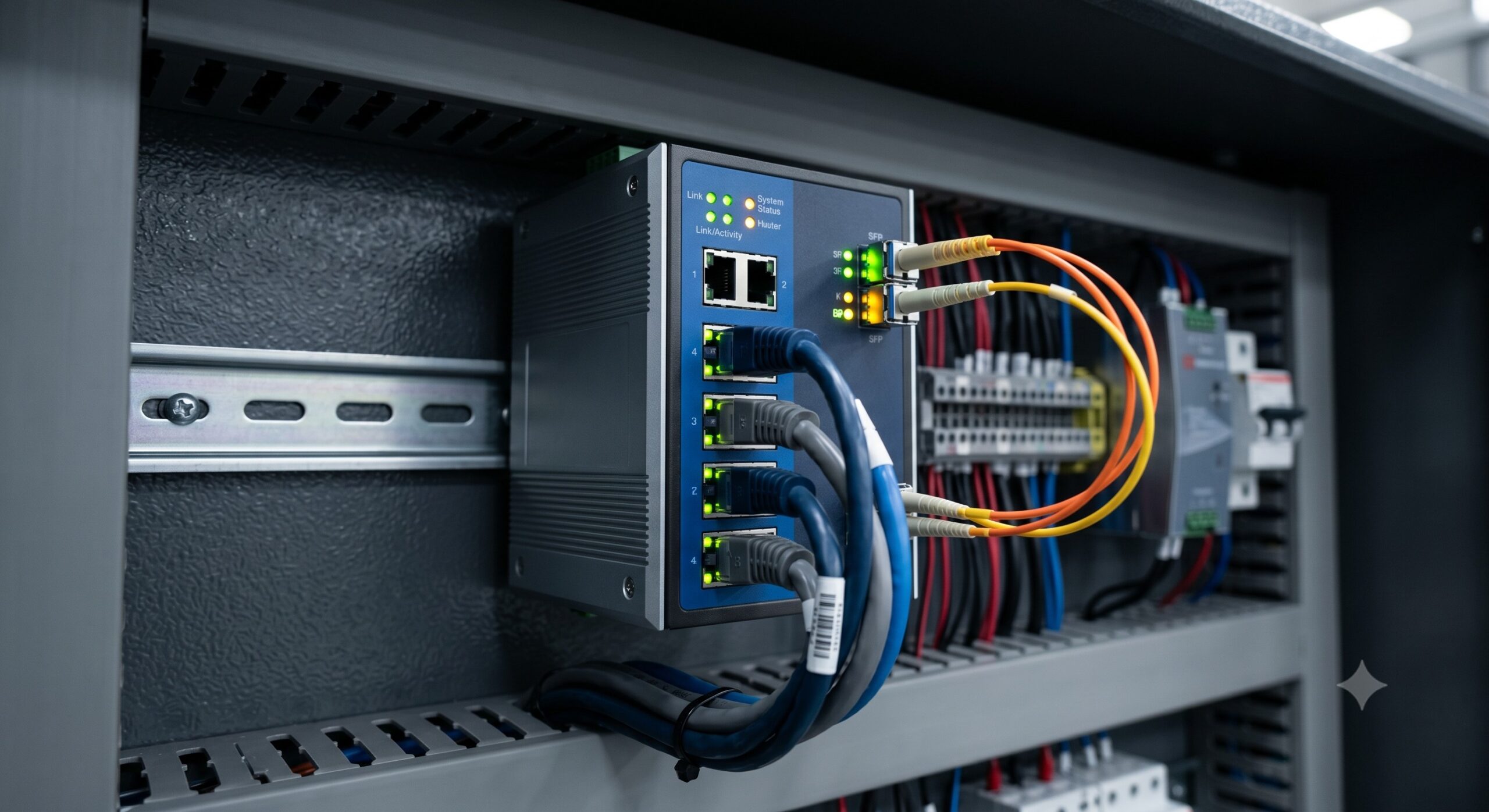
The foundational difference between an office-grade switch and a purpose-built industrial ethernet switch din rail lies in its ability to survive and operate flawlessly in non-climate-controlled environments. Office switches are typically validated for 0°C to 40°C, while industrial switches are engineered and tested for extreme temperature ranges, commonly from -40°C to +75°C. This is not a software setting but a hardware reality that mandates the use of industrial-temperature-grade capacitors, oscillators, and magnetics .
Environmental Hardening and Physical Resilience
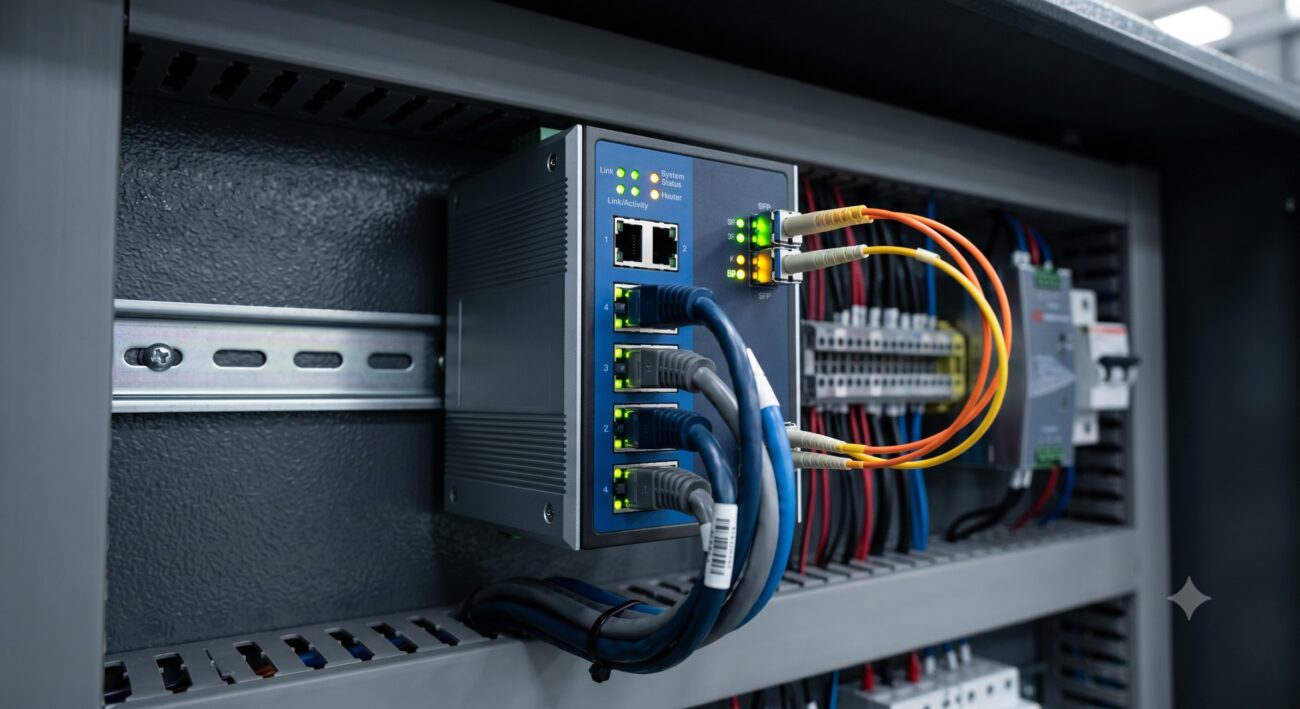
- Temperature and Thermal Management: A true industrial ethernet switch din rail employs fanless, convection-cooled designs with no moving parts. This is critical for extending MTBF in dusty or particulate-heavy environments. Compliance with IP40 (or higher) ingress protection ensures resistance to solid foreign objects, while the corrugated metal housing provides structural integrity .
- EMC and Surge Immunity: To survive on the factory floor or in roadside cabinets, these switches must comply with rigorous EMC standards. They are designed to handle high levels of electrostatic discharge (ESD), electrical fast transients (EFT), and surge events, as per IEC 61000-4-2, IEC 61000-4-4, and IEC 61000-4-5 standards, ensuring operation in environments with high electromagnetic interference (EMI) .
Redundancy Architecture: The Core of High Availability
The promise of carrier-grade reliability is delivered through a multi-layered approach to redundancy. The most sophisticated industrial ethernet switch din rail units integrate these features to provide resilience against both internal component failure and external power anomalies.
Dual Power Inputs and Failover
A primary feature of high-availability industrial switches is the support for dual redundant power inputs. This architecture allows the switch to be connected to two independent power sources. If one power supply circuit fails or drops below the nominal voltage, the switch will seamlessly transition to the backup power supply, ensuring uninterrupted network uptime. This is often coupled with a wide voltage range input (e.g., 9~60VDC or 12~48VDC) and reverse polarity protection to simplify installation and prevent damage .
Network Redundancy Protocols
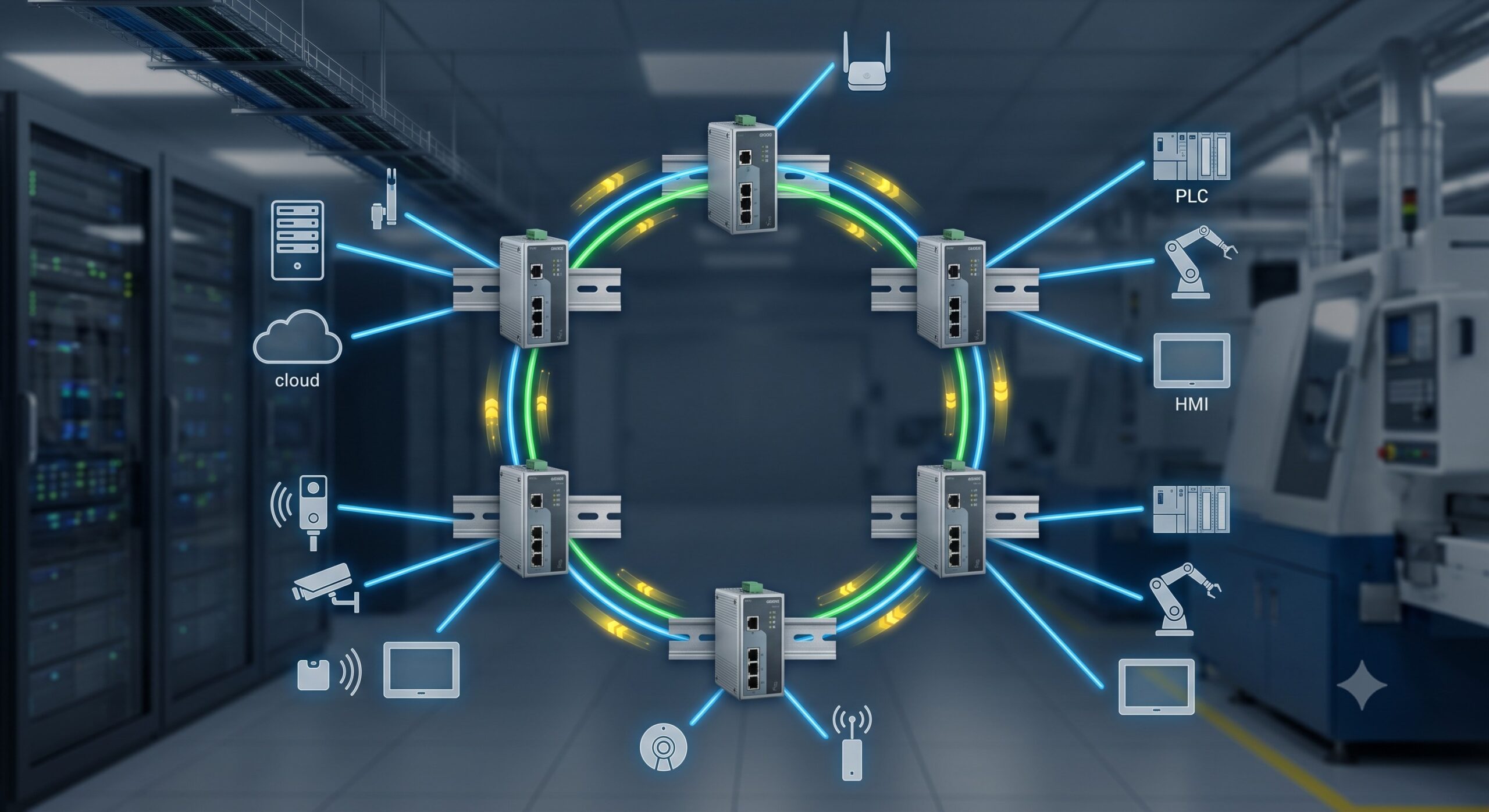
Beyond power, network-level redundancy is paramount. Managed industrial ethernet switch din rail models support a suite of ring redundancy protocols that allow networks to self-heal in milliseconds.
- Rapid Ring Recovery: Protocols such as DT-Ring (
- Standards-Based Redundancy: Support for standard protocols like STP/RSTP/MSTP and MRP (Media Redundancy Protocol) ensures interoperability with other industrial equipment and IT infrastructure, facilitating a unified and robust network architecture .
| Reliability Parameter | Specification / Value |
|---|---|
| Operating Temperature Range | -40°C to +75°C (Industrial Grade) |
| MTBF (Mean Time Between Failures) | Up to 540,249 hours |
| Power Redundancy | Dual DC Inputs (e.g., 9-60VDC) with Reverse Polarity Protection |
| Network Redundancy Protocol | |
| Protection Rating | IP40 Metal Housing |
Quantifying Reliability: MTBF as a Critical Metric
Mean Time Between Failures (MTBF) is the single most important quantitative metric for assessing the long-term reliability of any hardware component. For an industrial ethernet switch din rail, MTBF is calculated based on the failure rates of all components under specific operating conditions, particularly temperature. Industry-leading manufacturers provide MTBF figures often exceeding 540,000 hours, as seen in certain unmanaged industrial switch models . This high figure is achieved through a combination of derated components, conservative circuit design, and rigorous testing.
A key aspect of this is the use of specialized hardware like the internal ASIC (Application-Specific Integrated Circuit). Unlike merchant silicon designed for consumer electronics, an ASIC tailored for industrial use is optimized for low power consumption and can be temperature-hardened to maintain timing and forwarding performance at the extremes of the operating range, thereby directly contributing to a higher MTBF .
Mission-Critical Deployments: Case Studies in Resilience
The true test of carrier-grade reliability occurs in the field. Industrial ethernet switch din rail devices are deployed in a wide array of mission-critical applications where failure is not an option.
- Smart Grid and Substation Automation (IEC 61850-3): In power utilities, switches must comply with IEC 61850-3 and IEEE 1613, which specify strict immunity to EMI, surges, and transients. Redundant power and fast network ring recovery are essential to prevent cascading blackouts and maintain grid stability .
- Railway and ITS (EN 50155): The constant vibration, shock, and wide temperature variations in rail applications require switches built to EN 50155 standards. The industrial ethernet switch din rail mounting, combined with conformal coating and shock-resistant components, ensures continuous operation in rolling stock and wayside signaling equipment .
- Industrial Automation (ISA/IEC 62443): In manufacturing, the convergence of IT and OT networks places a premium on security and reliability. Industrial switches not only provide the physical layer resilience but also integrate security features to maintain operational integrity and prevent cyberattacks from causing physical damage or production halts .
Conclusion: Engineering for Zero-Downtime Operations
The selection of an industrial ethernet switch din rail is a strategic decision that goes far beyond basic port count and speed. Network architects must evaluate the hardware’s physical resilience, power redundancy, and network failover capabilities against the specific requirements of their deployment environment. By focusing on quantifiable metrics such as MTBF and adherence to industry-specific certifications (e.g., IEC 61850-3, EN 50155, UL 508), organizations can build industrial networks that deliver the carrier-grade reliability necessary to support digital transformation initiatives, including AI-driven analytics and IIoT, with zero tolerance for unplanned downtime .

Leave a comment