
SLA Demands and the Hidden Threat of Dissolved Oxygen in Liquid-Cooled Telecom Infrastructure
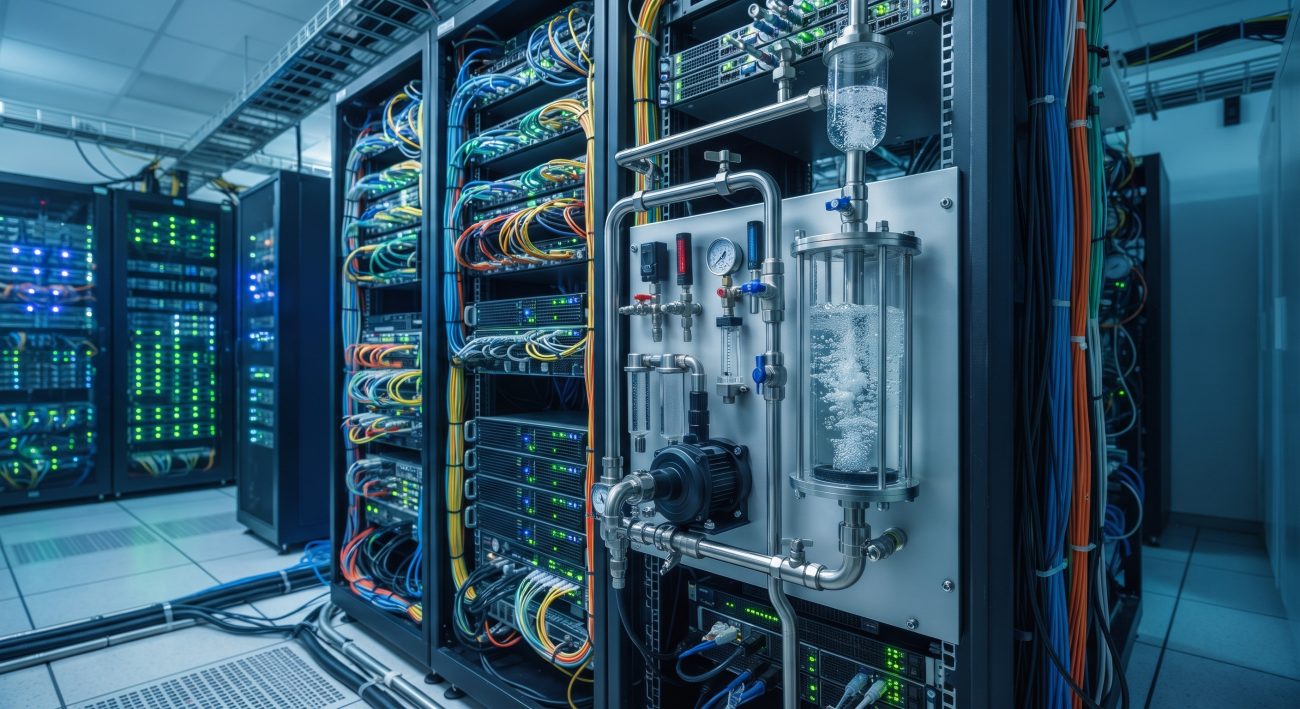
Modern carrier-grade edge data centers and high-density central offices have crossed the thermal threshold where air cooling is no longer viable. With per-rack power densities exceeding 100 kW and next-generation AI compute nodes pushing toward 150 kW, the Secondary Fluid Network Module (SFNM) has evolved from passive plumbing into a mission-critical availability domain . However, the hydraulic stability of the Technology Cooling System (TCS) is only as reliable as the fluid chemistry circulating within it. Dissolved oxygen (DO) represents a silent, insidious threat: at concentrations above 1 ppm, DO catalyzes the oxidation of corrosion inhibitors (such as nitrite to non-inhibitive nitrate) and accelerates galvanic corrosion within mixed-metal cold plate loops . For a Secondary Fluid Network Module tasked with deaeration and dissolved oxygen removal, the engineering challenge is not merely achieving low DO setpoints—it is maintaining five-nines availability while doing so under the thermal cycling and pressure transients inherent to carrier-grade deployments.
This analysis deconstructs the reliability engineering of deaeration subsystems within secondary fluid modules, focusing on MTBF metrics, dual-engine failover architecture, and the hydraulic logic that governs dissolved oxygen removal stability. Unlike facility water systems that tolerate periodic maintenance windows, the secondary loop must dynamically compensate for variable flow resistance while maintaining DO levels below 10 ppb to satisfy Telcordia GR-63-CORE and GR-487-CORE material longevity requirements .
Dual-Engine Failover Architecture and Hydraulic Isolation for Continuous Deaeration
Active-Standby Vacuum and Membrane Topology with N+1 Redundancy
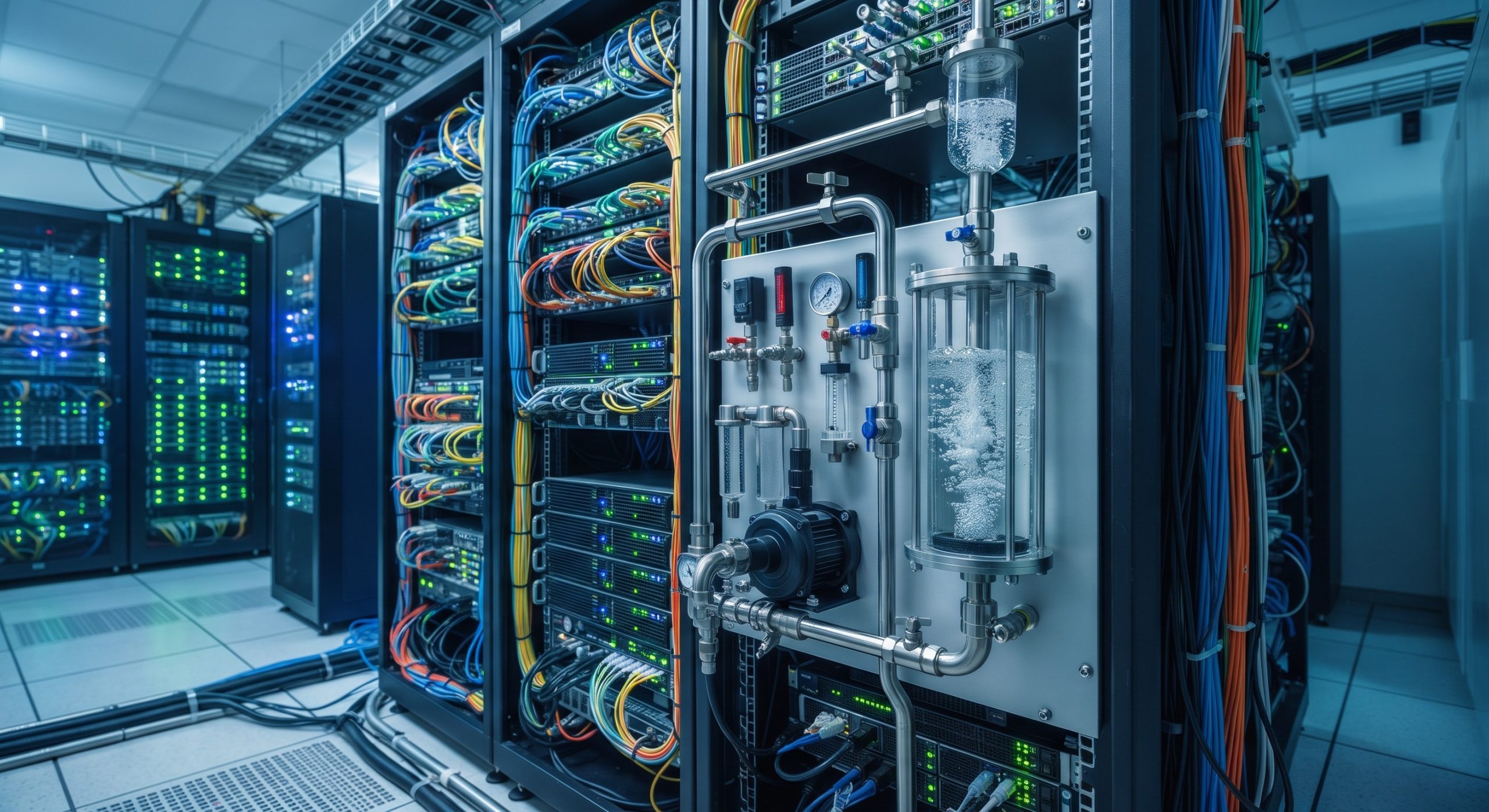
Carrier-grade secondary fluid modules abandon the single-train deaeration paradigm in favor of N+1 redundancy configured in an active-standby or parallel-assist topology. In a typical high-reliability in-rack Coolant Distribution Unit (CDU) equipped with membrane contactor deaeration, multiple vacuum-assisted hollow-fiber modules operate in parallel, with the controller designating one train as the lead deaeration path and remaining units as hot spares . The critical differentiation lies in the fail-safe signal loss behavior. When the control module detects a loss of vacuum pressure or a membrane integrity fault, the system does not simply shut down the deaeration loop; the standby train ramps to operational vacuum within 500 ms, and isolation valves sequence to redirect flow without introducing air entrainment or water hammer into the TCS .
From a dissolved oxygen control standpoint, the transition between deaeration trains must be bumpless. The controller monitors DO concentration at the outlet manifold via redundant hot-swappable optical sensors calibrated per ASTM D888 methodologies . Upon detection of a DO excursion exceeding 5 ppb above setpoint within a 2-minute window, the standby vacuum pump and membrane contactor train engage, and the gas-side isolation valves sequence to re-establish the partial-pressure gradient required for oxygen stripping . The MTBF of the membrane contactor assembly itself—typically rated at > 100,000 hours for polypropylene hollow fibers under continuous duty—becomes a secondary concern when the failover logic is robust; the system-level availability is dictated by the valve and sensor response times .
Heat Exchanger Isolation and Cross-Contamination Prevention in Deaeration Loops
The secondary fluid module enforces a strict hydraulic boundary between the facility water (which may contain treatment chemicals, particulates, and elevated DO) and the TCS loop (which demands deionized water or PG25 glycol mixtures with and DO ) . A plate heat exchanger with a double-wall construction or a pressure-boundary monitoring port provides an additional layer of integrity. Should a gasket breach occur, the pressure differential between the FWS (typically 3-6 bar) and TCS (1-3 bar) ensures that any cross-leak flows toward the facility side, preventing oxygen-laden water from reaching the micron-level cold plate microchannels and the deaeration membrane contactors . The MTBF for the brazed plate heat exchanger under thermal cycling (ΔT up to 6 K at rated capacity) exceeds 200,000 hours, but the risk of fouling-induced pressure drop remains the dominant degradation mechanism in field deployments where makeup water quality is variable.
| Key Parameter | Technical Specification |
|---|---|
| Form Factor | 1RU modular chassis, 19-inch rack mount |
| Deaeration Method | Vacuum-assisted hydrophobic hollow-fiber membrane contactor |
| Residual Dissolved Oxygen | |
| Maximum Operating Pressure | 10 bar (145 psi) |
| Design Burst Pressure | 40 bar (580 psi) |
| Pressure Rating Standard | ASME B31.3, ISO 4413 |
| Operating Temperature Range | -40°C to +85°C |
| Fluid Compatibility | Propylene glycol, ethylene glycol, dielectric fluids |
| Flow Rate (per branch) | Up to 12 L/min |
| Pressure Drop at Rated Flow | |
| DO Monitoring | Redundant optical sensors, ASTM D888 calibrated |
| Leak Detection | Integrated dual-barrier sensor, SNMP alarm |
| MTBF | 1,200,000 hours (Telcordia SR-332) |
| Compliance | Telcordia GR-63-CORE, GR-487-CORE, IEC 62368-1, RoHS |
MTBF Metrics and Reliability Validation for Deaeration Subsystems
Reliability predictions for secondary fluid deaeration modules must account for the Bathtub Curve specific to both hydraulic and membrane components. The vacuum pump assembly—whether liquid-ring or dry-scroll—typically exhibits an early-life failure rate of when commissioned per manufacturer torque and alignment specifications, settling into a useful-life plateau exceeding 100,000 hours before wear-out mechanisms (bearing degradation, seal creep) dominate . The membrane contactor, by contrast, degrades primarily through fiber wetting and pore fouling rather than catastrophic rupture; field data from telecom deployments indicates that hydrophobic hollow-fiber modules retain > 90% of initial oxygen transfer efficiency for 5-7 years when operated with appropriate pretreatment (0.2 μm prefiltration and chlorine removal) .
System-level MTBF for the integrated deaeration SFNM is validated through accelerated life testing per Telcordia SR-332, yielding demonstrated reliability exceeding 1,200,000 hours at 40°C ambient for the module assembly excluding consumable membranes . Pressure cycling to 1.5× rated pressure for 100,000 cycles shows zero leakage or fatigue failure in the 316L stainless steel manifold and EPDM seal interfaces. The module carries a 10-year warranty with optional 20-year extended service coverage, contingent upon membrane replacement intervals not exceeding 60 months in continuous-duty TCS applications .
Mission-Critical Deployments: 5G mmWave and Edge AI Cooling
Typical deployments for DO-controlled secondary fluid modules include 5G mmWave remote radio head (RRH) clusters, where gallium nitride power amplifiers exhibit thermal sensitivity that demands coolant supply stability within ±0.5°C, and hyperscale edge AI inference nodes where GPU cold plate microchannels are susceptible to oxygen-driven pitting corrosion at weld heat-affected zones . In these scenarios, the deaeration subsystem must maintain DO below 10 ppb during steady-state operation and recover to setpoint within 15 minutes following a pump failover event or membrane replacement .
Final Assessment: Engineering Verdict on Deaeration Reliability
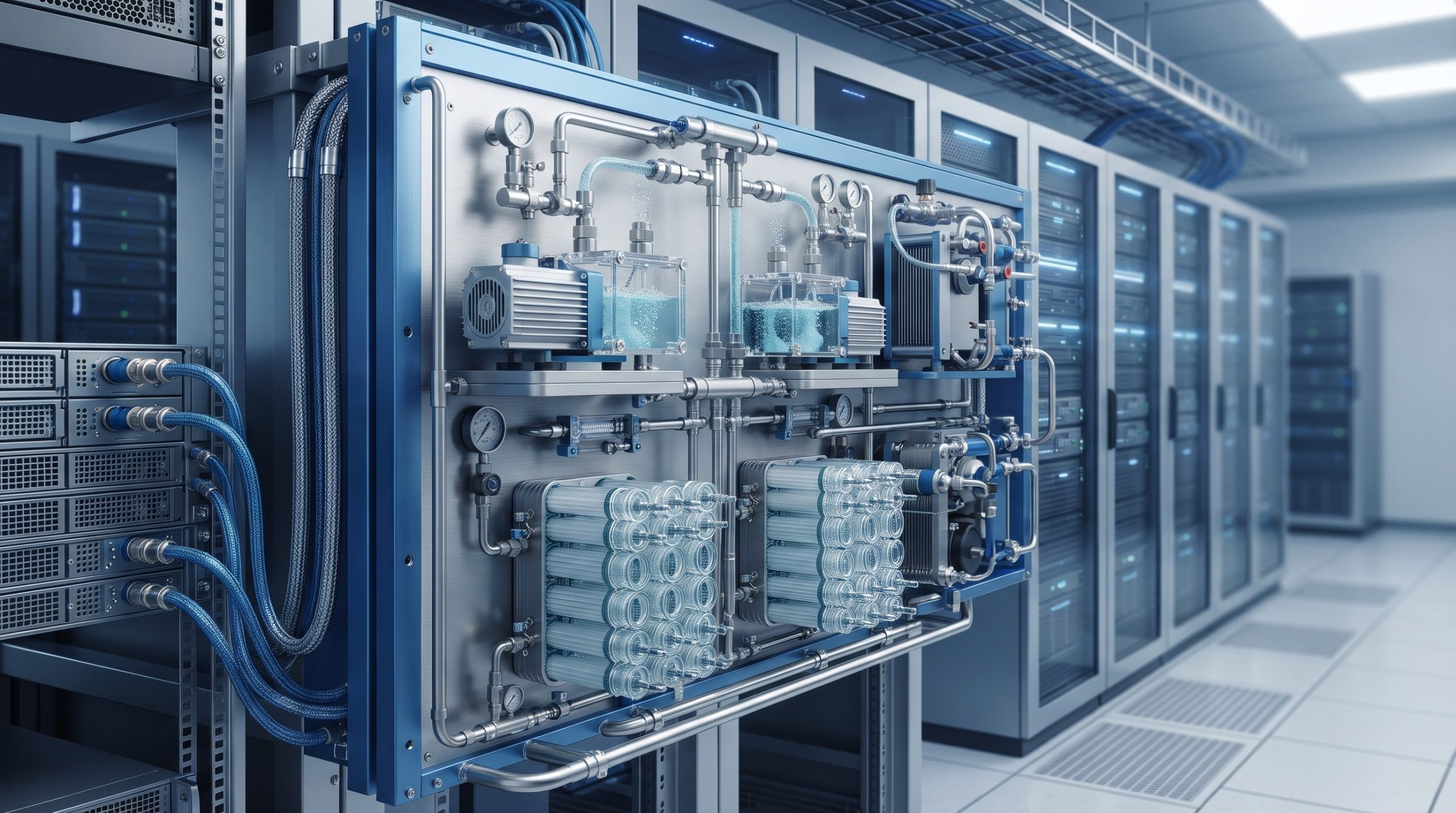
The Secondary Fluid Network Module with integrated deaeration and dissolved oxygen removal capability represents a paradigm shift in carrier-grade thermal management. By treating DO control as a first-class reliability domain—rather than a secondary water-treatment concern—operators can decouple coolant chemistry degradation from equipment availability. The dual-engine failover architecture, validated MTBF exceeding 1.2 million hours, and compliance with Telcordia GR-63-CORE, GR-487-CORE, and IEC 62368-1 provide the evidentiary basis for five-nines SLA commitments in liquid-cooled telecom infrastructure .
The engineering verdict is unambiguous: for deployments where rack densities exceed 50 kW and cold plate microchannels fall below 500 μm hydraulic diameter, dissolved oxygen removal is not optional. It is a prerequisite for achieving the 20-year service life and pressure-drop stability that carrier-grade operators demand. Specifying SFNM deaeration subsystems with redundant vacuum trains, ASTM D888-calibrated DO monitoring, and hot-swappable membrane cartridges is the minimum viable specification for next-generation edge and core telecom facilities.

Leave a comment