
In an era where network demands skyrocket by the minute, the debate over half-duplex configurations feels almost nostalgic—like arguing over dial-up modems in a 5G world. Yet, for many enterprises clinging to legacy systems, the Huawei Command Line Half Duplex Switch remains a polarizing tool. Is it a relic slowing down progress, or a hidden gem for specific industrial applications? The answer isn’t black-and-white. While full-duplex dominates modern setups, half-duplex still carves out niches where simplicity and collision management outweigh raw speed. But as IoT devices multiply and real-time data becomes non-negotiable, can networks relying on command-line half-duplex switches keep up? Let’s dissect why this technology sparks heated debates and whether it still belongs in today’s connectivity toolkit.
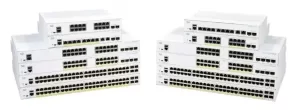
*Huawei Command Line Half Duplex Switch: Outdated or Essential?*
The Huawei Command Line Half Duplex Switch thrives in environments where control trumps complexity. Unlike full-duplex systems that allow simultaneous two-way communication, half-duplex forces devices to take turns transmitting—a design that seems archaic at first glance. But in industrial settings like manufacturing floors or remote utility grids, this limitation becomes a strength. For instance, legacy SCADA systems often operate in noisy environments where signal collisions are frequent. Here, half-duplex mode minimizes data corruption by ensuring only one device “speaks” at a time.
The command-line interface (CLI) aspect adds another layer of precision. Network admins familiar with Huawei’s CLI can fine-tune collision detection thresholds, retry timers, and buffer sizes manually—a level of control GUI-based systems rarely offer. Imagine a water treatment plant where sensors send intermittent status updates. Configuring the switch via CLI to prioritize collision avoidance over speed ensures reliable data delivery, even if it sacrifices bandwidth.
However, the drawbacks are undeniable. Half-duplex caps throughput by design, creating bottlenecks for video surveillance or cloud backups. For businesses eyeing AI-driven automation or edge computing, clinging to half-duplex could mean missed opportunities. The key is to audit your network’s actual needs rather than defaulting to “upgrade everything.”
*Can Legacy Networks Handle Modern Traffic?*
Not without compromises. Legacy networks built on half-duplex switches face two existential threats: escalating data volumes and shrinking tolerance for latency. Take retail environments as an example. A decade ago, a store’s network might handle point-of-sale transactions and basic inventory checks. Today, that same network must support real-time inventory tracking, AR-powered customer experiences, and seamless payment gateways—all while managing footfall analytics. A half-duplex setup would buckle under these demands, causing lag during peak hours or even data loss.
Yet, there’s a caveat: not all legacy systems need full overhauls. The Huawei CLI allows hybrid configurations. Admins can segment networks, reserving half-duplex for legacy devices (e.g., older security cameras) while dedicating full-duplex lanes to high-priority traffic. This approach mirrors adding carpool lanes to a highway—old and new coexist without gridlock.
Another overlooked advantage? Security. Half-duplex’s inherent collision detection can act as a rudimentary intrusion barrier. In setups where unauthorized devices occasionally connect (think temporary contractors in a factory), the switch’s forced “wait-your-turn” protocol can flag unusual activity patterns. It’s not a replacement for firewalls, but an extra layer of visibility for admins.
The real challenge is talent. CLI proficiency is dwindling as younger engineers gravitate toward cloud-native platforms. Companies relying on Huawei’s command-line tools must invest in training or risk configuration errors that amplify downtime.
The Huawei Command Line Half Duplex Switch isn’t a one-size-fits-all solution, but dismissing it as obsolete would be shortsighted. Its value hinges on context: in controlled, low-bandwidth environments with legacy dependencies, it offers stability and precision that newer systems struggle to match. However, for businesses scaling toward data-heavy operations, clinging to half-duplex could strangle growth. The verdict? Treat your network like a tailored suit—patch where necessary, replace where critical. Hybrid strategies leveraging both legacy and modern protocols will dominate the next decade, ensuring resilience without stifling innovation. As traffic patterns evolve, the question isn’t whether half-duplex will vanish, but how smartly we’ll phase it out while extracting its remaining value. After all, in networking, progress isn’t about chasing the “newest” but mastering the art of “what works.”

Leave a comment