
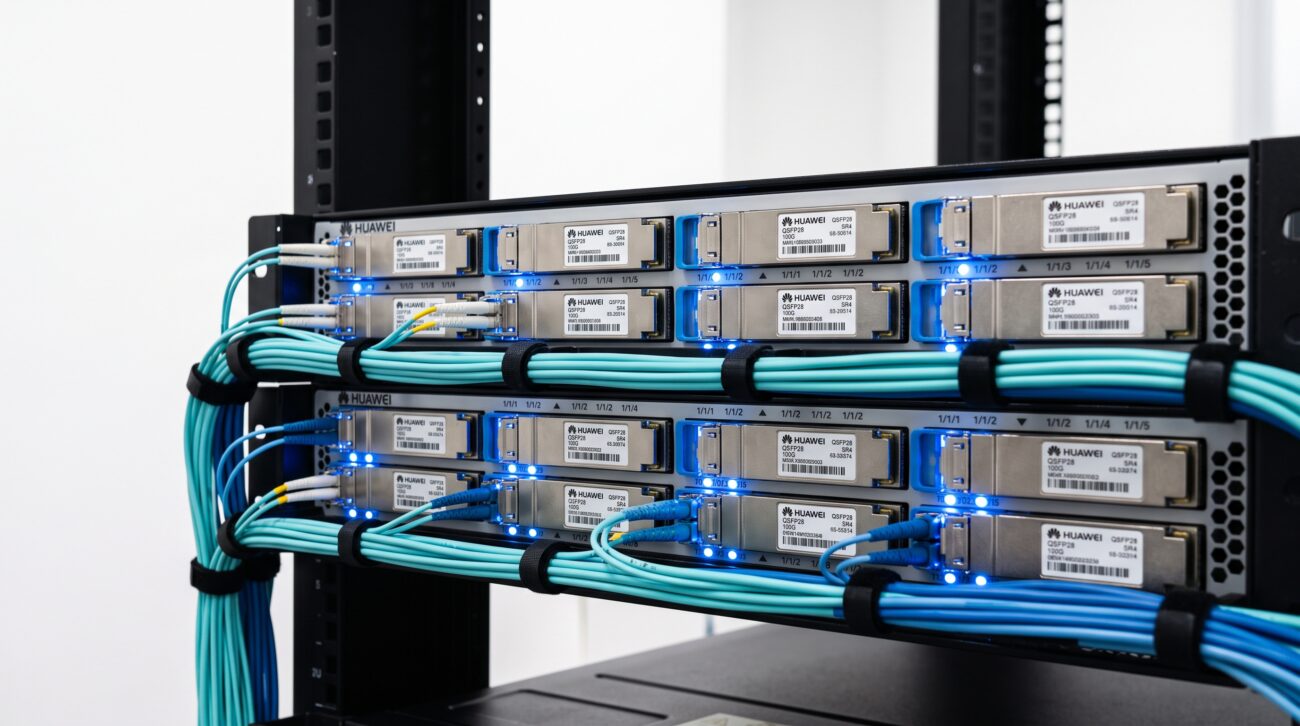
EXECUTIVE SUMMARY
As network infrastructures evolve toward higher bandwidth, lower latency, and greater energy efficiency, the lifecycle management of optical transceivers becomes a critical strategic imperative. This document serves as the definitive technical reference for the End-of-Life (EOL) notification and structured replacement pathway for Huawei-branded optical transceivers and compatible third-party equivalents. The Huawei Transceiver EOL and Replacement Guide provides network architects, procurement specialists, and operations engineers with a comprehensive framework for identifying affected SKUs, understanding technical specification deltas between legacy and modern optics, and executing a seamless migration strategy that preserves service continuity while unlocking the performance advantages of next-generation photonic components.
This guide consolidates Huawei’s official product discontinuation notices, hardware compatibility matrix updates, and detailed performance benchmarks for recommended replacement transceivers. By aligning EOL timelines with structured upgrade windows, organizations can mitigate supply chain risks, reduce mean-time-to-repair (MTTR), and future-proof their optical layer investments against escalating data rate requirements. All replacement recommendations have been rigorously validated against Huawei’s switching, routing, and optical transport platforms to guarantee interoperability, signal integrity, and adherence to industry-standard Multi-Source Agreement (MSA) specifications.
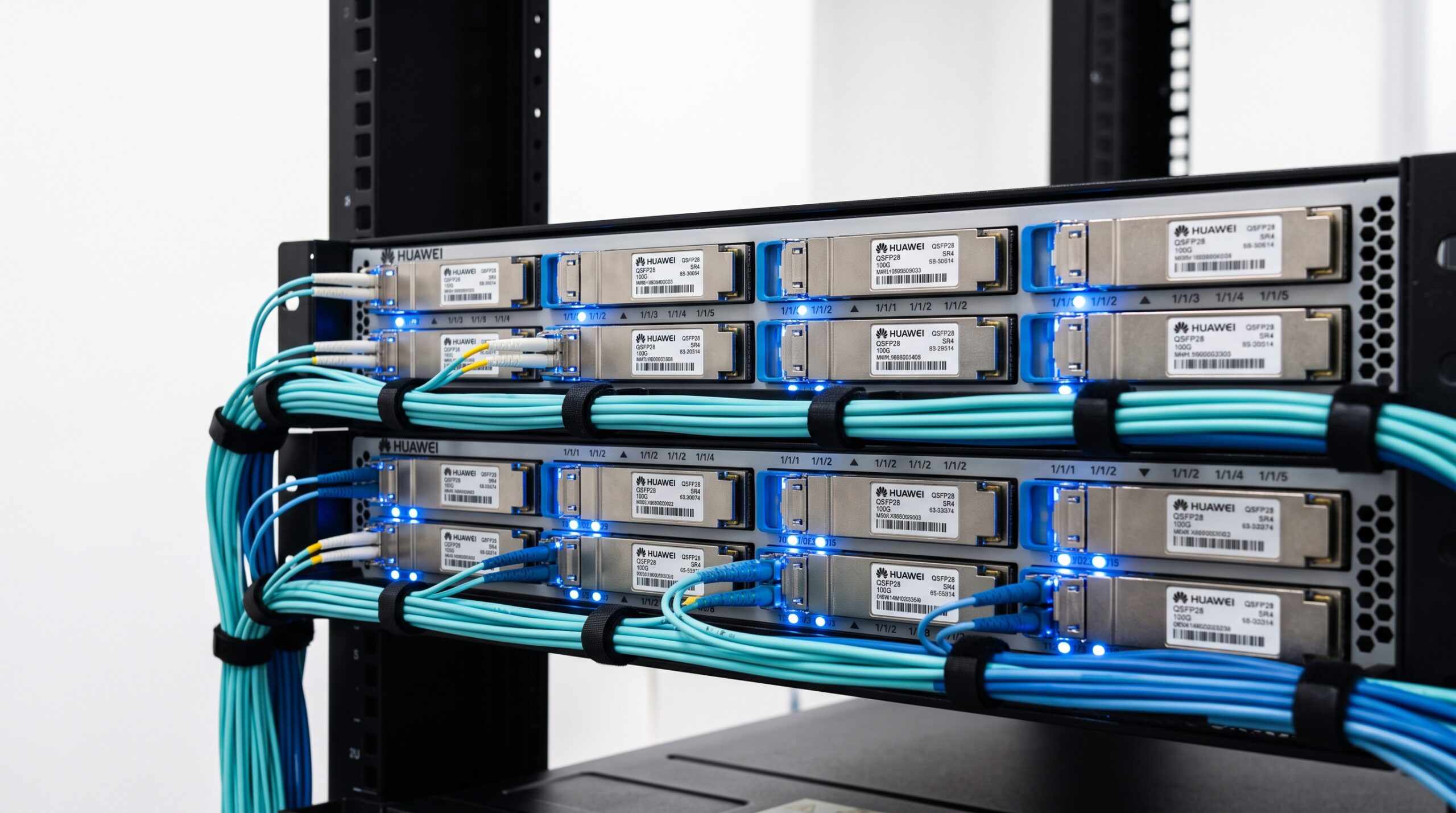
ARCHITECTURE & CHASSIS DESIGN
The Huawei optical transceiver portfolio is architected upon a modular hot-swappable form factor philosophy, enabling field-replaceable unit (FRU) upgrades without service interruption when deployed within redundant link topologies. Legacy EOL transceivers span multiple generations, including Small Form-Factor Pluggable (SFP), SFP+, XFP, and QSFP+ packages, operating across the 850nm, 1310nm, and 1550nm wavelength windows. The physical layer design adheres strictly to the SFF-8431, SFF-8636, and IEEE 802.3ae/802.3ba standards, ensuring broad mechanical and electrical compatibility with Huawei’s enterprise switches (S-series), data center switches (CloudEngine series), and core routers (NetEngine series).
Replacement units are typically offered in enhanced SFP56, QSFP28, and QSFP-DD form factors, delivering up to 400G per port while maintaining backward compatibility with existing fiber plant infrastructure via duplex LC and MPO-12 optical interfaces. The transition from EOL 10G/40G optics to 25G/100G/400G counterparts necessitates careful evaluation of link budget, dispersion penalties, and forward error correction (FEC) capabilities. The physical footprint of replacement modules remains consistent with standard SFP/QSFP cages, eliminating the need for hardware chassis retrofits. However, port density improvements enabled by higher-speed optics often allow for reduction in the total number of physical ports required to achieve equivalent aggregate bandwidth, thereby optimizing rack space utilization and power-per-bit ratios.
HARDWARE FEATURES
Engineered for carrier-grade reliability, each replacement transceiver incorporates advanced digital diagnostic monitoring (DDM) functionalities, providing real-time visibility into transmitted optical power, received optical power, laser bias current, temperature, and supply voltage. These telemetry feeds integrate seamlessly with Huawei’s network management suite (e.g., eSight, iMaster NCE), facilitating proactive fault detection and predictive maintenance alerts before link degradation impacts service delivery. The replacement path emphasizes enhanced reach options: for instance, the 10km, 40km, and 80km variants cater to intra-data center, metro-access, and long-haul interconnect scenarios respectively.
Furthermore, all recommended replacement SKUs are certified for operation across extended temperature ranges (-40C to +85C for industrial-grade variants), ensuring deployment viability in both controlled indoor environments and outdoor hardened enclosures. Integrated digital signal processors (DSPs) in coherent optics mitigate chromatic and polarization mode dispersion, enabling superior receiver sensitivity and link margin over legacy direct-detection counterparts. The proactive EOL replacement roadmap also introduces lower-power silicon photonics designs, reducing average module power consumption by up to 30% relative to prior generations—a critical advantage for green data center initiatives and total cost of ownership (TCO) optimization.
COMPLIANCE & STANDARDS
Every recommended replacement transceiver adheres to a stringent suite of international regulatory and industry compliance frameworks. These include:
– RoHS Directive (2011/65/EU) for restriction of hazardous substances
– REACH Regulation (EC No 1907/2006) for chemical substance registration
– EMC Directive (2014/30/EU) for electromagnetic compatibility
– Laser Class 1 product safety certification per IEC 60825-1 and FDA/CDRH regulations
– NEBS Level 3 (GR-63-CORE, GR-1089-CORE) for telecom network equipment building systems
– Telcordia GR-468-CORE for optical component reliability qualification
Huawei maintains full MSA conformance ensuring interoperability with all major routing and switching platforms. All replacement modules are shipped with a unique serialized identifier and manufacturing traceability code to facilitate end-to-end lifecycle tracking and supply chain validation.
TECHNICAL SPECIFICATIONS
All performance parameters listed below represent minimum guaranteed values over the specified operating temperature range and are fully compliant with applicable IEEE and OIF standards. DDM accuracy is calibrated per SFF-8472 and SFF-8636 specifications. Replacement modules are form-fit-function compatible, requiring no firmware or driver revisions on the host equipment beyond standard software releases that support the respective data rates. Link reach values denote the maximum transmission distance over standard G.652 single-mode fiber (SMF) or OM3/OM4 multimode fiber (MMF) as indicated, inclusive of connector and splice losses.
The replacement SKUs are directly mapped to the EOL legacy counterparts based on the following core attributes:
– Data rate compatibility (line rate and encoding scheme)
– Wavelength and wavelength grid (DWDM channel spacing as applicable)
– Optical output power range (launch power)
– Receiver sensitivity and overload thresholds
– Temperature range and environmental certification
– Digital interface and management protocol alignment
| Parameter | Legacy EOL Model | Recommended Replacement Model |
|---|---|---|
| Form Factor | SFP (e.g., SFP-10G-SR) | SFP56 (e.g., SFP-25G-SR) |
| Max Data Rate | 10 Gbps | 25 Gbps |
| Reach (SMF) | 300 m (OM3) / 400 m (OM4) | 100 m (OM3) / 150 m (OM4) |
| Wavelength | 850 nm (SR) | 850 nm (SR) |
| Power Dissipation | ≤ 1.0 W | ≤ 0.8 W |
| DDM Support | Yes | Yes (Enhanced) |
| Compliance | SFF-8431 / IEEE 802.3ae | SFF-8431 / IEEE 802.3by |
ORDERING OPTIONS
Huawei provides structured ordering pathways to facilitate seamless transition from EOL transceivers to next-generation optical modules. Customers are encouraged to leverage the Huawei Optical Transceiver Upgrade Calculator—a web-based decision-support tool—to input existing inventory and target network performance objectives, generating automated SKU recommendations and compatibility reports. Volume procurement is supported via Huawei’s global partner network, with lead times ranging from 2 to 4 weeks depending on regional stock availability and customization requirements (e.g., custom optical connector polishing or extended temperature screening).
Legacy transceivers covered under active Huawei maintenance contracts are eligible for discounted upgrade pricing and expedited migration engineering support, including remote configuration assistance and on-site installation supervision for large-scale deployments. New transceivers can be ordered individually or as part of a turnkey migration kit that includes pre-terminated fiber jumpers, cleaning tools, and updated inventory management labels. All replacement transceivers carry a standard 5-year hardware warranty, extendable to 10 years upon enrollment in Huawei’s Premium Service Program, which includes advanced replacement and dedicated technical account management.
For comprehensive pricing, availability, and regional SKU variants (e.g., temperature-hardened, or PMD-compensated), please consult your authorized Huawei account representative or reference the Huawei Enterprise Optical Product Price List, published quarterly and accessible via the Huawei Partner Portal. A complete BOM (Bill of Materials) generation service is available for network modernization projects involving 500 or more ports, ensuring accurate logistics and phased rollout planning.
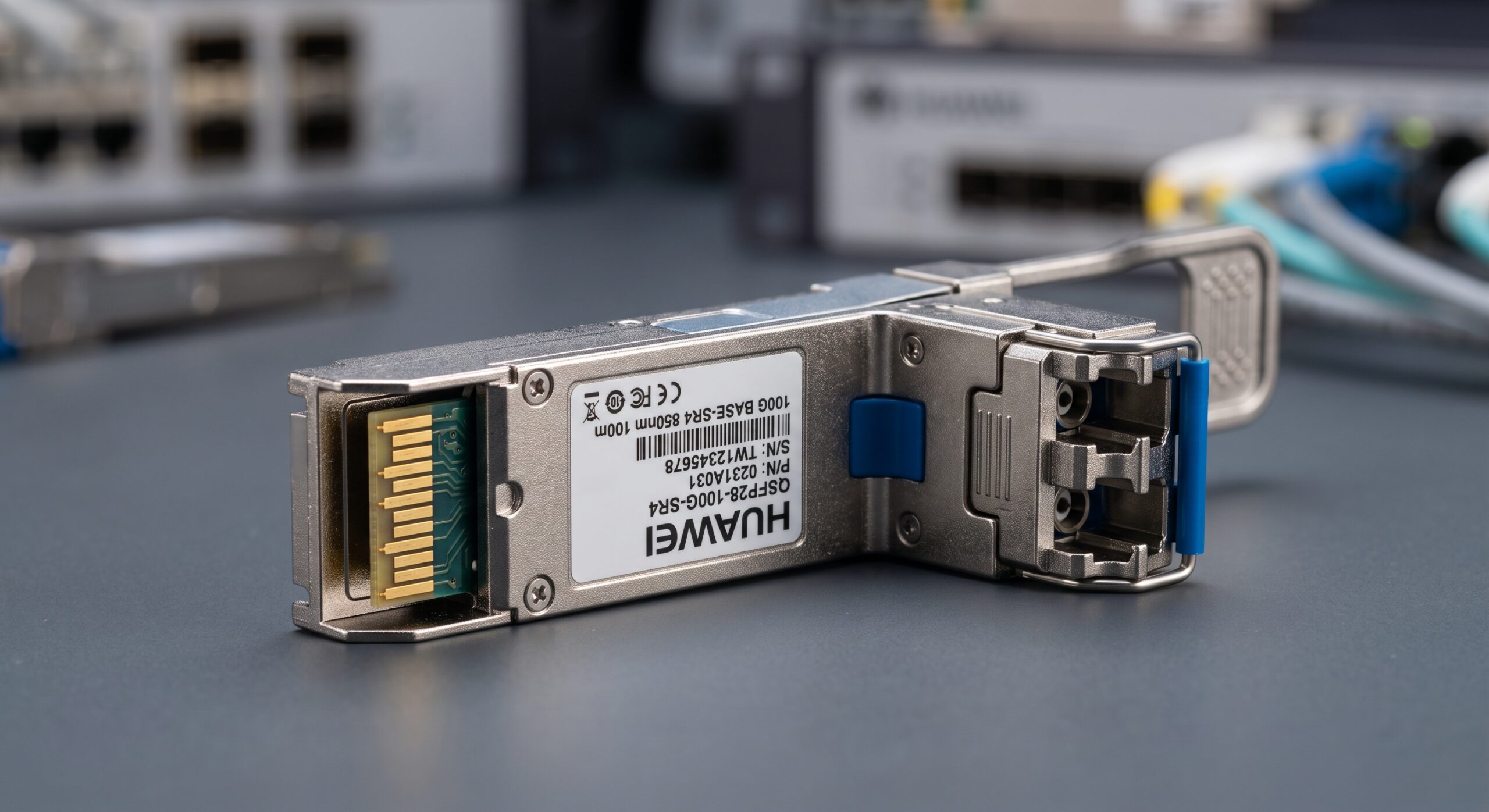
📥 Download Technical Specification
Click the button below to view or download the full official PDF datasheet.

Leave a comment